Abstract
References
Sorry, not available.
Click the PDF button.
Information
This is a study on ‘Mindfulness of Breathing(Āāāasati)’ and its application to the Psychosomatic therapy. According to the Pāi texts in the Theravāa tradition, Mindfulness of Breathing has some unique features. The Mindfulness of Breathing is the meditation practised by the Buddha himself, which comprises the Four Satipaṭṭāa; it can be applied to the both Samatha and Vipassanāeditation and fulfills all of four conditions which are presented for the comparison to the other methods of meditation. Therefore it can be asserted that among the fifty kinds of meditation-subjects which were aught by the Buddha, the Āāāasati is the most important meditation with a complete system to cover the whole spiritual journey from the start to the final goal. The Āāāasati has an excellent function of psychotherapy as we see the benefits and fruits of Āāāasati described in Pāi texts. So this paper investigated how the Āāāasati has been applied to the various programs of western psychosomatic therapy. In the MBSR program, the Mindfulness of Breathing is treated as an significant method and is applied throughout the whole eight weeks in either direct or indirect ways. The MBCT also provides the Mindfulness of Breathing as the ‘3 Minutes Breathing Space’ in the third week to escape from unconscious automatic reactions. The DBT also uses the Mindfulness of Breathing in several ways. Application of Buddhist meditation to psychosomatic therapy is a new trend in modern times. Although the western therapeutic programs aim to cure just mental and physical diseases through Buddhist meditation, it is worthy to note that this meditation also cures suffering and gives the light of wisdom and insight to the people involved.
본 논문은 남방 상좌불교 전통에서의 호흡관 수행과 이 호흡관 의 심신치유 적용에 관한 것이다. 빨리(Pāli) 문헌들과 상좌불교 수 행전통에 의하면, 호흡관 수행은 몇 가지 독특한 특징을 가진다. 즉, 호흡관은 석가모니 붓다가 직접 수행하였고 깨달음을 얻었던 수행 법이라는 점, 신수심법 4념처를 다 성취하고 포섭한다는 점, 사마 타 수행과 위빠사나 수행으로 다 적용할 수 있다는 점 그리고 다른 수행법들과의 비교분석에서 제시한 4가지 조건들을 모두 다 충족 시킨다는 점이다. 붓다가 가르친 50여 가지의 다양한 수행법들 중 에서 각각의 수행법들이 가진 기능과 역할을 비교 분석 해볼 때, 호 흡관 수행은 수행의 출발점부터 도착점까지 다 가능하게 하는 가장 완벽한 수행체계를 가진 가장 중요한 수행법이라는 점이다. 빨리(Pāli) 문헌에 나타난 호흡관 수행의 이익과 결실들에 의하 면, 호흡관 수행은 탁월한 심리치유 기능을 가졌다. 서양의 심신치 유 프로그램에서 이 호흡관 수행을 어떻게 적용하는지 몇 가지 예 들을 살펴보았다. ‘마음챙김에 근거한 스트레스 완화(MBSR)’프로 그램에서는 호흡명상뿐만 아니라 바디스캔, 정좌명상, 걷기명상, 마 음챙김 요가명상 등에 호흡에 대한 마음챙김을 기본적으로 다 수반 시키기 때문에, 8회기 전반에 걸쳐 호흡명상이 직접 간접적으로 적 용되고 있다. ‘마음챙김에 근거한 인지치료(MBCT)’에서도 3회기 에 3분 호흡 공간’이란 방법으로 제시되는데, 무의식적 자동반응으 로부터 쉽게 빠져나올 수 있도록 잘 구조화되어 있었고, 변증법적 행동치료(DBT)에서도 호흡명상을 몇 가지 측면으로 변화 있게 제 시한다. 또한 심리치료 현장에서 상담자가 내담자를 상담하면서 호 흡 명상의 원리를 잘 적용하고 있음도 나타난다. 불교수행을 서양의 심신치유 프로그램에서 적용하는 것은 분명 현대의 새로운 흐름이다. 이제는 불교수행이 불교라는 테두리를 넘 어서서 고통 받는 수많은 사람들을 치유하고 지혜와 통찰의 빛을 제공하고 있다는 것은 참으로 시사점이 많다.
Click the PDF button.
- Publisher :Korean Association of Buddhist Studies
- Publisher(Ko) :불교학연구회
- Journal Title :Korean Journal of Buddhist Studies
- Journal Title(Ko) :불교학연구
- Volume : 32
- Pages :613 ~ 657
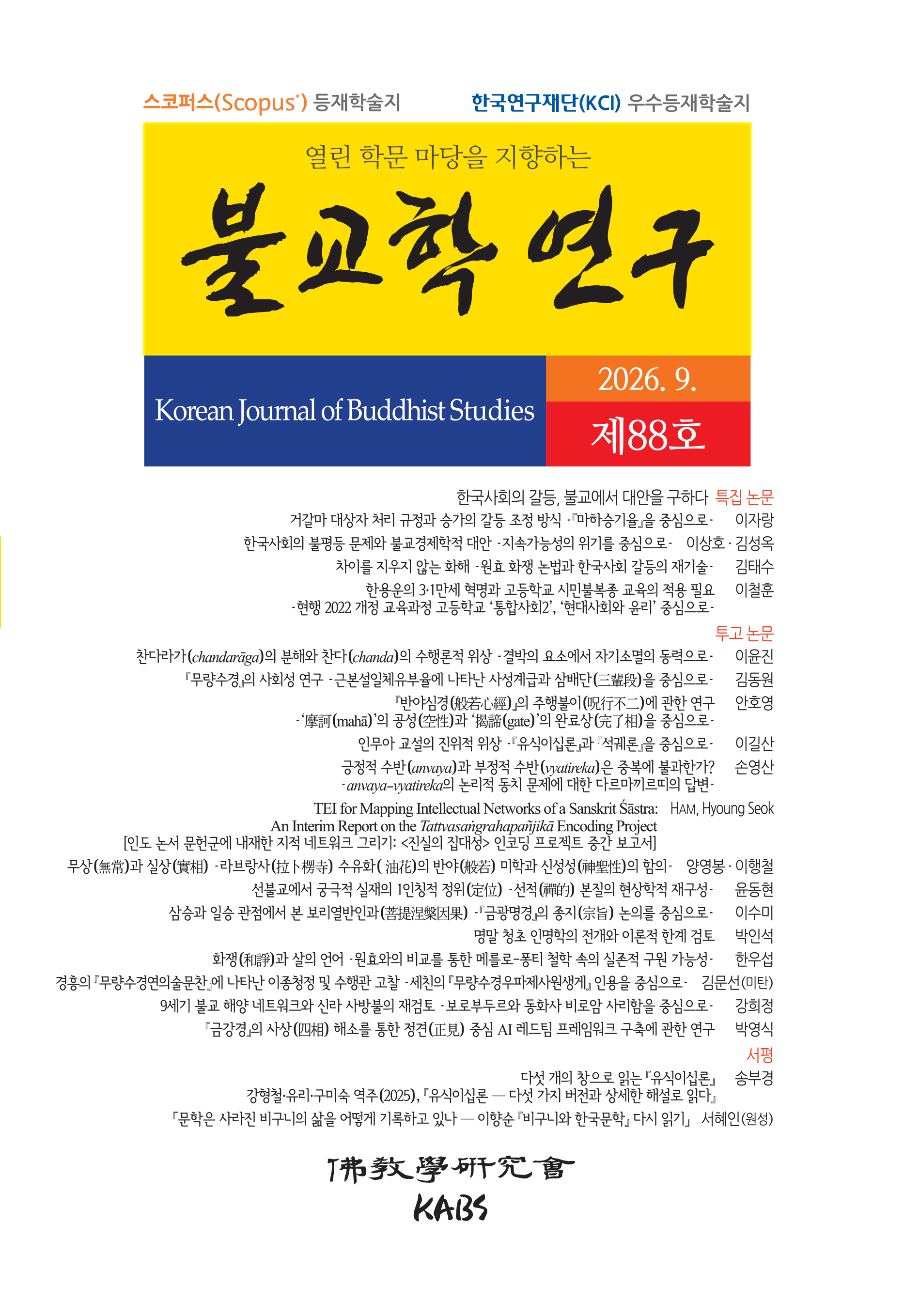 Korean Journal of Buddhist Studies